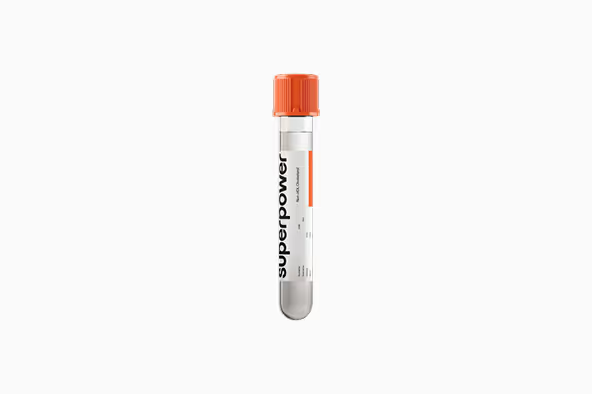
Biomarkers
/
Thyroid Health
/
Thyroid Peroxidase (TPO) Ab

Thyroid Peroxidase (TPO) Ab

Thyroid Peroxidase Antibodies (TPOAb) are a marker of the immune system attacking the thyroid gland.
Subscribe for updates
By clicking “Subscribe” you agree to our Terms and Privacy Policy.
Your content is on its way!
By clicking “Subscribe” you agree to our TOS and Privacy Policy.
Oops! Something went wrong while submitting the form.
Book your test now
Book a Thyroid Peroxidase (TPO) Ab Test
With Superpower, you have access to a comprehensive range of biomarker tests
Physician reviewed
CLIA-certified labs
HIPAA compliant

Key benefits of Thyroid peroxidase antibody testing

  • Reveals if your immune system is attacking your thyroid gland.
  • Flags autoimmune thyroid disease before symptoms become severe or irreversible.
  • Explains unexplained fatigue, weight changes, or mood shifts tied to thyroid dysfunction.
  • Guides treatment decisions when thyroid hormone levels sit in borderline zones.
  • Protects fertility by identifying autoimmune risk that may affect conception or pregnancy.
  • Tracks disease activity over time to adjust therapy and prevent complications.
  • Best interpreted with TSH, Free T4, and your clinical symptoms for full context.

What is Thyroid peroxidase antibody?

Thyroid peroxidase antibody (TPO antibody) is an immune protein produced by your body's defense system that mistakenly targets thyroid peroxidase, a key enzyme inside your thyroid gland. Thyroid peroxidase is essential for making thyroid hormones, which regulate your metabolism, energy, and growth. When TPO antibodies are present, they signal that your immune system has identified your own thyroid tissue as foreign.

Your immune system turning on itself

The presence of TPO antibodies indicates autoimmune activity against the thyroid. These antibodies can interfere with thyroid peroxidase's normal function, disrupting hormone production over time. They are the hallmark of autoimmune thyroid conditions, where the body's protective mechanisms become misdirected.

A window into thyroid inflammation

TPO antibodies reflect ongoing or potential thyroid inflammation. Their presence often precedes or accompanies changes in thyroid function, making them a valuable marker of autoimmune thyroid disease.

Why this antibody matters

Detecting TPO antibodies helps identify the underlying cause of thyroid dysfunction. It distinguishes autoimmune processes from other thyroid problems, guiding understanding of what's happening inside your thyroid gland.

Why is Thyroid peroxidase antibody important?

Thyroid peroxidase antibody (TPO-Ab) reveals whether your immune system is mistakenly attacking your thyroid gland, the metabolic control center in your neck. This antibody targets the enzyme that helps produce thyroid hormones, which regulate energy, temperature, heart rate, digestion, mood, and reproductive function. Elevated TPO-Ab signals autoimmune thyroid disease, most commonly Hashimoto's thyroiditis or Graves' disease, and predicts future thyroid dysfunction even when hormone levels still appear normal.

When antibodies stay quiet

In healthy individuals, TPO-Ab levels remain undetectable or very low, typically below 35 IU/mL depending on the lab. This reflects a thyroid free from autoimmune attack. The gland produces hormones smoothly, supporting stable metabolism and energy throughout the body.

When the immune system turns inward

Elevated TPO-Ab indicates ongoing autoimmune inflammation within the thyroid. Over months to years, this can destroy thyroid tissue, leading to hypothyroidism with fatigue, weight gain, cold intolerance, constipation, brain fog, and depression. Women are five to eight times more likely to develop thyroid autoimmunity than men, especially during reproductive years and after pregnancy. High antibody levels during pregnancy increase risk of postpartum thyroiditis and miscarriage.

The long view on thyroid immunity

TPO-Ab serves as an early warning system, often appearing years before thyroid hormone imbalance becomes clinically apparent. Monitoring this biomarker helps anticipate progression to overt disease, assess cardiovascular and metabolic risk, and understand fertility challenges in women of childbearing age.

What do my Thyroid peroxidase antibody results mean?

Low or undetectable values

Low values usually reflect the absence of autoimmune activity against the thyroid gland. Thyroid peroxidase antibodies are proteins made by the immune system that mistakenly target thyroid peroxidase, an enzyme essential for producing thyroid hormone. When these antibodies are absent or very low, the thyroid is not under immune attack, and hormone production can proceed normally. This is the expected finding in most healthy individuals.

Optimal range

Being in range suggests no significant autoimmune thyroid disease. Most laboratories define normal as undetectable or very low levels of thyroid peroxidase antibodies. There is no advantage to having any measurable amount, so optimal sits at the lowest detectable limit. This reflects immune tolerance to thyroid tissue and stable thyroid function over time.

Elevated values

High values usually reflect autoimmune thyroid disease, most commonly Hashimoto thyroiditis or Graves disease. The antibodies interfere with thyroid peroxidase function and promote inflammation within the thyroid gland, often leading to gradual destruction of thyroid tissue and eventual underproduction of thyroid hormone. Women are affected more often than men, and prevalence increases with age. Elevated antibodies during pregnancy raise the risk of postpartum thyroiditis and may influence fetal thyroid development.

Factors that influence results

Antibody levels can fluctuate over time and may rise during periods of stress or illness. Some individuals have persistently elevated antibodies without overt thyroid dysfunction for years.

Gain clarity on thyroid autoimmunity, energy metabolism, and reproductive health by identifying antibody activity before hormone changes appear.

Do I need a Thyroid peroxidase antibody test?

Struggling with unexplained fatigue, weight changes, or feeling unusually cold? Could your immune system be attacking your thyroid, and might testing for thyroid peroxidase antibodies reveal what's happening?

Thyroid peroxidase antibodies indicate whether your immune system is targeting your thyroid gland, which can disrupt hormone production and leave you feeling off. Elevated levels often point to autoimmune thyroid conditions like Hashimoto's thyroiditis.

Testing your TPO antibodies gives you a vital snapshot of your thyroid health, helping pinpoint whether autoimmunity is driving your fatigue, weight struggles, or temperature sensitivity. This clarity empowers you to personalize your treatment plan and take meaningful steps toward feeling better.

Get tested with Superpower

If you’ve been postponing blood testing for years or feel frustrated by doctor appointments and limited lab panels, you are not alone. Standard healthcare is often reactive, focusing on testing only after symptoms appear or leaving patients in the dark.

Superpower flips that approach. We give you full insight into your body with over 100 biomarkers, personalized action plans, long-term tracking, and answers to your questions, so you can stay ahead of any health issues.

With on-demand access to a care team, CLIA-certified labs, and the option for at-home blood draws, Superpower is designed for people who want clarity, convenience, and real accountability - all in one place.

Method: FDA-cleared clinical laboratory assay performed in CLIA-certified, CAP-accredited laboratories. Used to aid clinician-directed evaluation and monitoring. Not a stand-alone diagnosis.

Subscribe for updates
By clicking “Subscribe” you agree to our Terms and Privacy Policy.
Your content is on its way!
By clicking “Subscribe” you agree to our TOS and Privacy Policy.
Oops! Something went wrong while submitting the form.

Similar biomarker tests from Superpower

See more biomarkers

FAQs about Thyroid Peroxidase (TPO) Ab

A thyroid peroxidase antibody (TPO-Ab) test measures immune proteins that mistakenly target thyroid peroxidase, an enzyme your thyroid uses to make thyroid hormones. When TPO antibodies are present, they signal autoimmune activity against the thyroid gland and often reflect thyroid inflammation. This helps identify whether thyroid dysfunction is likely autoimmune (such as Hashimoto’s thyroiditis or sometimes Graves’ disease) rather than due to a non-autoimmune cause.

TPO antibody testing can help explain unexplained fatigue, weight gain, brain fog, depression, or mood shifts when thyroid dysfunction is suspected. Elevated TPO-Ab suggests autoimmune thyroid disease that can gradually impair hormone production over time. It’s especially useful when symptoms are present but thyroid hormone levels are borderline, because it reveals whether the immune system is actively attacking thyroid tissue and predicts risk of future hypothyroidism.

Most labs consider TPO antibodies normal when they’re undetectable or below a cutoff, commonly under 35 IU/mL. In healthy individuals, TPO-Ab is absent or very low, reflecting immune tolerance toward the thyroid. “Optimal” is essentially near zero, since any measurable antibody can indicate some immune activation. Normal/low results suggest there is no active autoimmune attack on the thyroid, and other causes of thyroid symptoms may be considered.

High TPO-Ab usually indicates autoimmune thyroid disease - most commonly Hashimoto’s thyroiditis, and less often Graves’ disease. Very high levels (sometimes above 1,000 IU/mL) often correlate with more significant thyroid inflammation and risk of progressive thyroid damage. Even if TSH and Free T4 are still normal, elevated antibodies can predict future hypothyroidism over months to years and help explain symptoms tied to thyroid dysfunction.

TPO antibodies target thyroid peroxidase, an enzyme required for thyroid hormone production. This autoimmune activity can interfere with normal thyroid function and contribute to ongoing inflammation. Over time, thyroid hormone output may decline, leading to hypothyroidism and symptoms like fatigue, cold intolerance, constipation, dry skin, weight gain, hair thinning, and menstrual irregularities. Because thyroid hormones influence energy use, heart rate, digestion, temperature, and mood, long-term autoimmune damage can affect many organ systems.

TPO antibodies are best interpreted alongside TSH, Free T4, and your clinical symptoms. TPO-Ab identifies autoimmune activity, while TSH and Free T4 show how well the thyroid is currently maintaining hormone levels. You can have high antibodies with normal hormones early on, which signals risk for future dysfunction. In borderline thyroid labs, a positive TPO-Ab result can guide treatment decisions and monitoring frequency by clarifying that autoimmunity is driving the pattern.

Yes. Elevated TPO-Ab can flag autoimmune thyroid risk that may affect fertility and pregnancy, even before hormone levels shift dramatically. In pregnancy, high TPO antibodies are associated with increased risk of miscarriage, preterm birth, and postpartum thyroiditis. Because thyroid hormones support reproductive function and fetal development, identifying TPO-Ab can prompt closer monitoring of thyroid status (often with TSH and Free T4) to protect conception and pregnancy outcomes.

TPO antibody levels can rise or fall over time and may fluctuate independently of symptoms. Pregnancy often suppresses immune activity, which can temporarily lower TPO-Ab levels, while the postpartum period can trigger a rebound surge in autoimmunity. This matters because a “lower” pregnancy result may not reflect long-term risk, and postpartum increases can coincide with postpartum thyroiditis. Interpreting results with timing, symptoms, and thyroid labs (TSH, Free T4) improves accuracy.

High TPO-Ab can matter even without symptoms because it often precedes measurable thyroid hormone changes. Elevated antibodies indicate autoimmune thyroid inflammation and predict increased risk of developing hypothyroidism over time, especially during hormonal shifts like pregnancy or menopause. The antibodies don’t always cause immediate symptoms, but they can guide proactive monitoring and early intervention to help preserve thyroid function and prevent complications related to metabolism, mood, cardiovascular risk, and reproductive health.

A common misconception is that TPO antibodies alone diagnose hypothyroidism; they don’t - TSH, Free T4, and symptoms show current thyroid function. Another misconception is that a single antibody number always matches symptom severity; TPO-Ab can vary by assay and fluctuate over months to years. It’s also incorrect to assume normal thyroid hormones mean “no risk” if antibodies are high; elevated TPO-Ab can signal early autoimmune thyroid disease before labs shift.