Excellent 4.6 out of 5
Heart & Vascular Health

Blood Testing for Large HDL P

Large HDL-P blood testing measures the number of large high-density lipoprotein particles in the bloodstream. HDL particles are tiny spheres of fat and protein built around apolipoprotein A‑I in the liver and intestine. They begin as small, disc-like carriers that collect cholesterol from cells, then mature as that cholesterol is packaged (esterified by LCAT) and the particles grow. Available at 2,000+ lab locations and at-home (select states). See FAQs below

Large HDL P Blood Test — Get the Superpower Panel
Cancel anytime
HSA/FSA eligible
Results in a week
Physician reviewed

Every result is checked

·
CLIA-certified labs

Federal standard for testing

·
HIPAA compliant

Your data is 100% secure

Key Benefits

  • Measure your large HDL particle count for added insight into heart health.
  • Spot metabolic imbalance; low large HDL-P often accompanies insulin resistance.
  • Clarify HDL-C by indicating how many HDL particles are large.
  • Add context to risk; interpret with triglycerides, HDL-C, LDL-C, and A1c.
  • Guide diet, exercise, and triglyceride-lowering plans that raise large HDL-P.
  • Track changes from weight loss, glycemic control, or triglyceride-lowering therapy.
  • Use as context only; treatment still prioritizes lowering LDL cholesterol and risk.

What is a Large HDL P blood test?

Large HDL-P blood testing measures the number of large high-density lipoprotein particles in the bloodstream. HDL particles are tiny spheres of fat and protein built around apolipoprotein A‑I in the liver and intestine. They begin as small, disc-like carriers that collect cholesterol from cells, then mature as that cholesterol is packaged (esterified by LCAT) and the particles grow. The “large” HDL particles are the mature, cholesterol‑rich form of HDL; this test counts that specific subclass.

Large HDL particles move cholesterol from tissues and artery walls to the liver for recycling or disposal (reverse cholesterol transport via SR‑BI). They also carry enzymes and proteins with antioxidant and anti‑inflammatory activity. The number of large HDL particles reflects the maturation state of the HDL pathway—how collected cholesterol has been packaged and is ready for hepatic uptake—and offers a view of HDL transport capacity beyond standard cholesterol totals.

Why is a Large HDL P blood test important?

Large HDL-P measures the concentration of large high-density lipoprotein particles—the mature HDL vehicles that carry cholesterol and anti-inflammatory proteins through the bloodstream back toward the liver. It offers a window into reverse cholesterol transport, metabolic health, and vascular protection across systems linking the liver, arteries, adipose tissue, and immune signaling.

Laboratories classify values as low, average, or high rather than using a single “target.” In general, values in the mid-to-upper portion of the reference interval tend to track with healthier HDL remodeling, but extremely high results are not automatically better and can sometimes signal atypical physiology.

When this measure is low, it usually reflects insulin resistance–driven lipoprotein remodeling: excess triglyceride-rich VLDL from the liver and heightened CETP and hepatic lipase activity shift HDL toward smaller, short-lived particles. The result is less efficient cholesterol carriage, more arterial inflammation, and tighter coupling with high triglycerides, fatty liver, and dysglycemia. Symptoms are often absent; clues are central adiposity and metabolic syndrome features. Men more commonly show lower large HDL-P; in children and teens, low levels often mirror weight gain and early insulin resistance.

Very high concentrations can signal robust HDL maturation and lower atherogenic burden, yet in some settings—genetic CETP variants, heavy alcohol intake, thyroid or autoimmune disease, or chronic inflammation—HDL can be plentiful but functionally impaired. Women generally have higher HDL and more large particles; during pregnancy, HDL rises early and shifts later in gestation without clear symptoms.

Big picture: Large HDL-P complements HDL-C, total HDL particle number, apoB, LDL particle measures, triglycerides, and markers of inflammation. Interpreted alongside these, it refines cardiovascular and metabolic risk by reflecting how effectively the body traffics cholesterol across liver–artery–immune networks over the long term.

What insights will I get?

What a Large HDL-P blood test tells you

This test estimates the concentration of large high‑density lipoprotein particles in your blood. Large HDL particles are the mature carriers that pick up cholesterol from tissues and vessel walls and return it to the liver (reverse cholesterol transport). They also ferry enzymes and proteins that calm inflammation and oxidative stress, supporting vascular tone, metabolism, and immune balance.

Low values usually reflect fewer mature HDL particles available to clear cholesterol and buffer inflammation. This commonly accompanies too much triglyceride in the blood (hypertriglyceridemia), insulin resistance, and chronic inflammation, where HDL becomes smaller and is cleared faster. Men and postmenopausal women typically run lower than premenopausal women. In pregnancy, unusually low large HDL-P can signal higher metabolic stress. Systemically, low levels align with a more atherogenic lipoprotein pattern and endothelial strain.

Being in range suggests active cholesterol efflux, efficient lipoprotein remodeling, and a less inflammatory vascular environment. Within the reference interval, results that sit in the mid‑to‑higher portion are often associated with more favorable cardiometabolic profiles and stable lipid transport dynamics.

High values usually reflect abundant mature HDL particles and can be seen with higher estrogen states or certain genetic variants (e.g., reduced CETP activity). While higher levels often correlate with lower atherosclerotic risk, very high values may indicate unusually large, cholesterol‑rich HDL that can be less effective in some inflammatory or liver conditions. Rarely, markedly elevated levels coexist with “dysfunctional” HDL despite high concentration.

Notes: Results vary by assay method (NMR platforms differ), fasting status, and recent illness. Pregnancy shifts HDL size across trimesters. Estrogens tend to raise, androgens may lower large HDL-P; thyroid status and liver disease also influence results. Interpret using the same lab’s reference interval and clinical context.


Superpower also tests for

See more blood diseases

Frequently Asked Questions About

What is Large HDL P testing?

Large HDL P testing measures the number of large high-density lipoprotein particles in your blood, providing insight into reverse cholesterol transport capacity and HDL particle quality beyond HDL-C.

Why should I test Large HDL P?

Testing Large HDL P reveals HDL particle function, helps explain discordance with HDL-C, and highlights patterns linked to triglycerides, insulin resistance, and fitness. It also tracks how training, nutrition, weight changes, and smoking status influence HDL remodeling.

How often should I test Large HDL P?

Test periodically to establish a baseline and monitor trends, especially during changes in diet, training, weight, or hormone status.

What can affect my Large HDL P?

Diet quality, aerobic and resistance exercise, weight status, triglycerides, insulin resistance, smoking, alcohol intake, thyroid and liver function, menopause, estrogen exposure, and anabolic androgens can all influence Large HDL P.

Are there any preparations needed before Large HDL P testing?

Some lipid-related tests use fasting to align results with triglyceride and related measures. Follow the specific instructions provided with your test.

What states are Superpower’s at-home blood testing available in?

Superpower currently offers at-home blood testing in the following states: Alabama, Arizona, California, Colorado, Connecticut, Delaware, District of Columbia, Florida, Georgia, Idaho, Illinois, Indiana, Kansas, Maine, Maryland, Massachusetts, Michigan, Minnesota, Missouri, Montana, Nebraska, Nevada, New Hampshire, New Jersey, New Mexico, New York, North Carolina, Ohio, Oklahoma, Oregon, Pennsylvania, South Carolina, Tennessee, Texas, Utah, Vermont, Virginia, Washington, West Virginia, and Wisconsin.

We’re actively expanding nationwide, with new states being added regularly. If your state isn’t listed yet, stay tuned.

What happens if my Large HDL P is outside the optimal range?

Use the result to focus on modifiable factors such as improving triglyceride control, increasing physical activity, refining nutrition quality, managing weight, and addressing smoking. Interpret results alongside total HDL-P, ApoB, triglycerides, and glucose–insulin markers.

Can lifestyle changes affect my Large HDL P?

Yes. Aerobic training, resistance exercise, weight loss from fat mass, higher-fiber and unsaturated-fat eating patterns, omega-3 intake, and smoking cessation generally raise Large HDL P, while refined carbohydrates, inactivity, and sleep loss can lower it.

How do I interpret my Large HDL P results?

Consider Large HDL P together with HDL-C, total HDL-P, LDL-related risk (e.g., ApoB), triglycerides, inflammation (hs-CRP), and glucose–insulin markers to understand cholesterol transport efficiency and overall cardiometabolic context.

Is Large HDL P testing right for me?

Large HDL P testing benefits anyone tracking cholesterol transport quality, monitoring cardiometabolic health, or assessing how training, weight change, hormones, and nutrition affect HDL particles over time.

How it works

1

Test your whole body

Get a comprehensive blood draw at one of our 2,000+ partner labs or from the comfort of your own home.

2

An Actionable Plan

Easy to understand results & a clear action plan with tailored recommendations on diet, lifestyle changes, supplements and pharmaceuticals.

3

A Connected Ecosystem

You can book additional diagnostics, buy curated supplements for 20% off & pharmaceuticals within your Superpower dashboard.

Superpower tests more than 
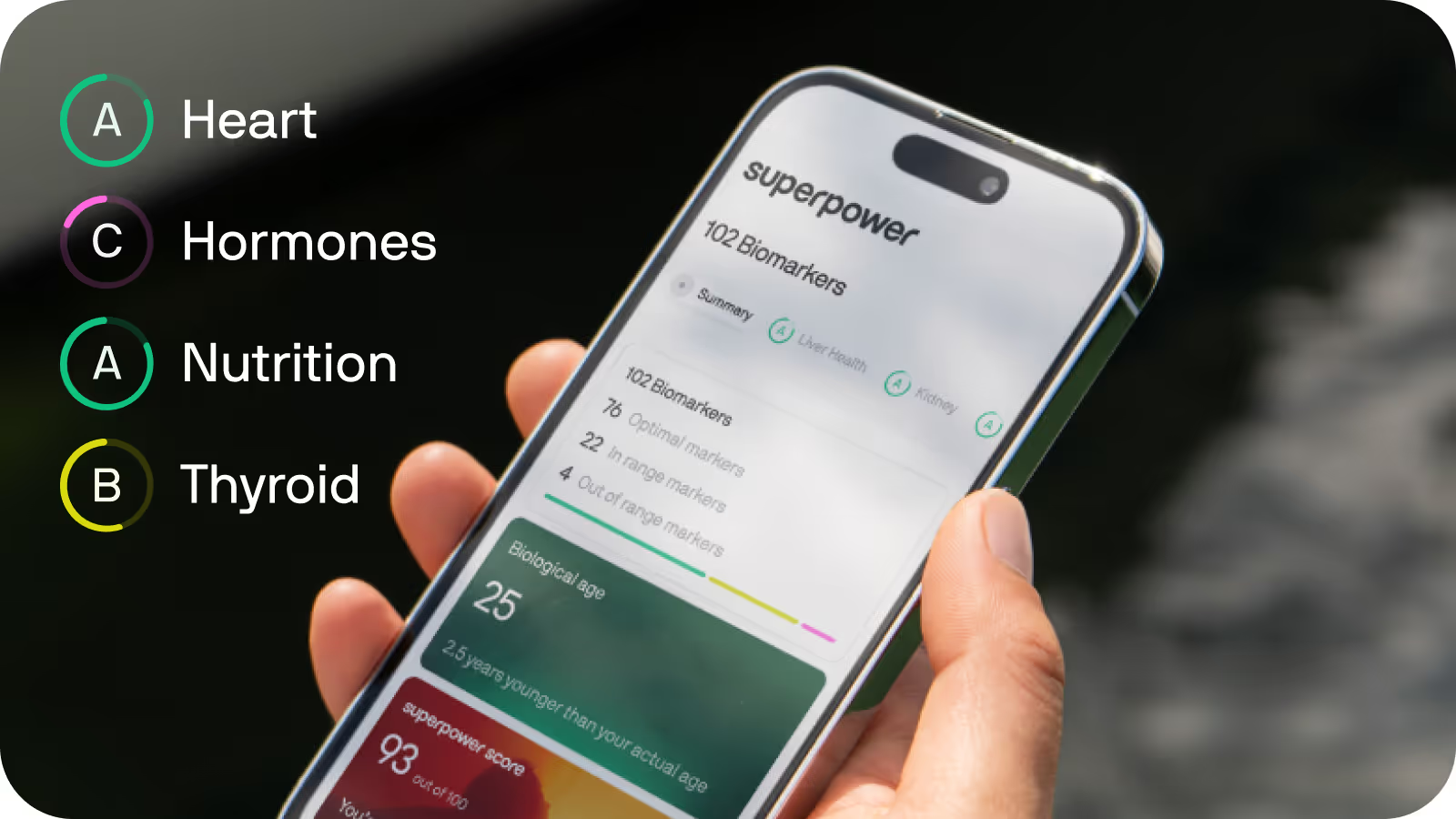
100+ biomarkers & common symptoms

Developed by world-class medical professionals

Supported by the world’s top longevity clinicians and MDs.

Dr Anant Vinjamoori

Superpower Chief Longevity Officer, Harvard MD & MBA

A smiling woman wearing a white coat and stethoscope poses for a portrait.

Dr Leigh Erin Connealy

Clinician & Founder of The Centre for New Medicine

Man in a black medical scrub top smiling at the camera.

Dr Abe Malkin

Founder & Medical Director of Concierge MD

Dr Robert Lufkin

UCLA Medical Professor, NYT Bestselling Author

Your membership

Select your assessment level

Superpower provides the most advanced health check with a plan that works. Go far beyond your annual physical.

Panels designed by

world class clinicians

2,000+ lab locations

across the country

Baseline

$199/yr

100+ biomarker blood test

Performance

Recommended

$365/yr

115+ biomarker blood test

60 biomarker follow-up retest

Complete

$649/yr

115+ biomarker blood test

60 biomarker follow-up retest

Gut microbiome analysis

Organ age breakdown

Get started
Loading...
HSA/ FSA eligible · Secure checkout

Baseline

$199

per year

Covers your metabolic, hormonal and cardiovascular baseline. The best basis for a single snapshot of your overall health.

What's included

Test Breakdown

These are the panels offered in the tiers above

100+ biomarker blood test

Heart & Vascular Health

20 markers

ApoB, LDL-Cholesterol, Triglycerides

Sex Hormones

8 markers

Testosterone, Estradiol, DHEA-S, Cortisol

Metabolic Health

7 markers

Glucose, HbA1c

Thyroid Health

4 markers

TSH, T3 Uptake, Free T4, T4 Total

Liver Health

13 markers

ALT, AST, GGT, Bilirubin

Nutrients

12 markers

Vitamin D, Total Protein, Hemoglobin

Immune System

16 markers

White blood cells, Neutrophils, Lymphocytes

Energy

5 markers

Ferritin, Iron, Cortisol

Kidney Health

9 markers

Creatinine, eGFR, Potassium, Sodium

See full list →

+21 additional

Included with every assessment

17 health areas developed by world class clinicians

Personalized clinical protocol

On-demand messaging with your care team

20% off superpower marketplace

Member pricing on add-on tests, supplements & RX

Upload past labs & wearable data for tracking

Superpower AI — a world class system trained on you

Complete

$649

per year

Normally $703 (save 8%)

Adds gut microbiome analysis and organ age surfacing, what standard blood panels may miss across energy, digestion, and immunity.

What's included

Test Breakdown

These are the panels offered in the tiers above

115+ biomarker blood test

Heart & Vascular Health

20 markers

ApoB, LDL-Cholesterol, Triglycerides, Lipoprotein(a)

Sex Hormones

11 markers

Testosterone, Estradiol, DHEA-S, Cortisol, PSA, FSH, LH, AMH

Metabolic Health

7 markers

Glucose, HbA1c, Insulin

Thyroid Health

4 markers

TSH, T3 Uptake, Free T4, T4 Total

Liver Health

8 markers

ALT, AST, GGT, Bilirubin

Nutrients

12 markers

Vitamin D, Total Protein, Hemoglobin

Immune System

16 markers

White blood cells, Neutrophils, Lymphocytes

Energy

5 markers

Ferritin, Iron, Cortisol

Kidney Health

24 markers

Creatinine, eGFR, Potassium, Urinary pH, RBC Urine, Nitrites

DNA Health

3 markers

Homocysteine, B12, Folate

Inflammation

3 markers

hs-CRP, Systemic Immune-Inflammation Index

See full list →

+8 additional

60 biomarker follow-up retest

Retesting panel

100 markers

Complete second draw — 60 biomarkers retested for longitudinal tracking.
Most biomarkers can move significantly within 3–6 months if you're actively trying to fix them.

Gut microbiome analysis

$239

Gut microbiome

300+ data points

Profiles 300 bacterial strains in your gut to map your microbial balance.
Identifies dysbiosis that may be driving symptoms like bloating, irregular digestion, skin issues, and mood changes, with actionable guidance on diet and lifestyle shifts to help restore balance.

Organ age breakdown

$99

OrganAge is the most detailed biological age test available today. Rather than showing a single number, it reveals how old each of your body's nine key systems is

Organ age breakdown

10 key systems

Circulatory, digestive, genitourinary, infectious, mental, metabolic, musculoskeletal, nervous, respiratory and systemic ages based on cutting edge longevity research

Included with every assessment

17 health areas developed by world class clinicians

Personalized clinical protocol

On-demand messaging with your care team

20% off superpower marketplace

Member pricing on add-on tests, supplements & RX

Upload past labs & wearable data for tracking

Superpower AI — a world class system trained on you

Get started
Loading...
HSA/ FSA eligible · Secure checkout

Finally, healthcare that looks at the whole you