
Excellent 4.6 out of 5
Metabolic Health

Blood Testing for Uric Acid

Uric acid blood testing measures urate, the end product of purine breakdown. Purines come from the nucleic acids in your cells and from food. As cells turn over and purines are recycled or degraded, enzymes convert them through hypoxanthine and xanthine to uric acid (urate), mainly via xanthine oxidase in the liver and intestinal tissues. Available at 2,000+ lab locations and at-home (select states). See FAQs below

Uric Acid Blood Test — Get the Superpower Panel
Cancel anytime
HSA/FSA eligible
Results in a week
Physician reviewed

Every result is checked

·
CLIA-certified labs

Federal standard for testing

·
HIPAA compliant

Your data is 100% secure

Key Benefits

  • Measure uric acid to assess gout risk and guide treatment.
  • Spot high uric acid early, reducing flares, tophi, and joint damage.
  • Clarify painful, swollen joints by supporting or arguing against gout.
  • Guide treatment targets: usually under 6 mg/dL, or 5 with tophi.
  • Flag kidney stone risk from uric acid, prompting hydration and preventive therapy.
  • Support pregnancy care by flagging elevations linked with preeclampsia severity.
  • Track treatment response and lifestyle changes, especially with diuretics, alcohol, or fructose.
  • Best interpreted with kidney tests and your symptoms for full context.

What is an Uric Acid blood test?

Uric acid blood testing measures urate, the end product of purine breakdown. Purines come from the nucleic acids in your cells and from food. As cells turn over and purines are recycled or degraded, enzymes convert them through hypoxanthine and xanthine to uric acid (urate), mainly via xanthine oxidase in the liver and intestinal tissues. Urate then circulates in the bloodstream and is carried to the kidneys for clearance, with a smaller portion eliminated through the gut. The test captures how much urate is present in your blood at that time.

Urate is primarily a waste-handling molecule, but it also serves as a major antioxidant in human plasma. Its blood level reflects the balance between production (purine turnover, cell breakdown, dietary purines) and removal (kidney filtration with reabsorption and secretion, plus intestinal excretion). Because urate can form crystals under certain conditions (monosodium urate), the circulating level indicates the body’s overall load of this solute and the demands placed on its clearance systems.

Why is an Uric Acid blood test important?

Uric acid is the end-product of purine breakdown and a workload marker for the kidneys. In the bloodstream it can act as an antioxidant, yet inside tissues and at high levels it becomes pro-oxidative and crystal-forming. That dual nature is why it touches joints (gout), kidneys (stones and filtration), blood vessels (endothelial function), and metabolism.

Most labs set reference ranges in the mid–single digits—typically a bit higher in adult men than in women, with children lower and postmenopausal women trending upward. For long-term health, values in the middle of the range are generally considered most favorable.

When values run low, the body may be producing less uric acid (rare enzyme defects, severe liver disease, very low purine availability) or losing more through the kidneys (renal tubular transport defects). Many people feel fine, but very low levels can reduce circulating antioxidant capacity. In inherited renal hypouricemia, high urinary urate can trigger exercise-induced flank pain, stones, or acute kidney injury. Children with genetic forms may present this way. Early pregnancy often shows lower uric acid physiologically.

When values run high, either production is up (high cell turnover states such as psoriasis or hematologic disorders) or kidney excretion is down (impaired filtration, insulin resistance). Symptoms can include gout flares and uric acid stones; chronic elevation is linked to declining kidney function, hypertension, and cardiometabolic risk. Men are affected more often; in late pregnancy, higher levels correlate with preeclampsia severity and fetal growth restriction.

Big picture: uric acid integrates purine metabolism, renal handling, vascular biology, and insulin signaling. Persistently unbalanced levels—especially high—track with gout, nephrolithiasis, chronic kidney disease, and cardiovascular events, while very low levels can uncover rare renal or metabolic disorders.

What insights will I get?

A uric acid (serum urate) blood test measures the circulating end product of purine breakdown. It reflects how much your body is producing (cell turnover and liver metabolism via xanthine oxidoreductase) and how well your kidneys are clearing it (filtration and tubular handling). In the bloodstream, urate can act as an antioxidant, while inside tissues it can promote oxidative stress and inflammation. Levels connect to risk of gout and kidney stones and track with cardiometabolic, renal, and pregnancy physiology.

Low values usually reflect increased kidney loss or reduced production. Common settings include excess antidiuretic hormone with dilution and uricosuria (SIADH), proximal tubule dysfunction (Fanconi-type), or medications that block urate production; rare genetic defects (xanthinuria) do the same. Early pregnancy often lowers urate because kidney clearance rises. Effects are often subtle, though very low urate may signal a reduced circulating antioxidant pool or an underlying sodium–water imbalance.

Being in range suggests balanced purine turnover and kidney handling, steadier redox signaling, and lower risk of crystal formation. Reference intervals differ by sex and age (men higher; premenopausal women lower; levels rise after menopause). Observational data suggest the lower-to-mid part of the range is often associated with favorable vascular and metabolic profiles.

High values usually reflect renal underexcretion or overproduction. Underexcretion occurs with reduced filtration, insulin resistance, and diuretic or calcineurin-inhibitor exposure; overproduction appears with rapid cell turnover (psoriasis, hematologic disorders) or tumor lysis. System effects include gout, uric acid stones, endothelial dysfunction, hypertension, fatty liver, and faster kidney disease progression. In late pregnancy, higher urate aligns with preeclampsia risk.

Notes: Interpretation varies with sex, age, pregnancy stage, acute illness, and medications (diuretics, low-dose aspirin, niacin increase; high-dose aspirin and uricosurics decrease; xanthine oxidase inhibitors lower production). Fasting is not required; modest diurnal and lab-to-lab variation exists.


Superpower also tests for

See more blood diseases

Frequently Asked Questions About

What is Uric Acid testing?

Uric Acid testing measures the concentration of uric acid in your blood to reflect purine metabolism and elimination. It helps assess risk for gout, kidney stones, and broader metabolic strain.

Why should I test my Uric Acid levels?

Testing detects silent elevations, sets a personal baseline, and shows how diet, alcohol, fructose, hydration, weight change, and medications affect your levels over time.

How often should I test Uric Acid?

Frequency depends on your results and risk factors. Retest periodically, and more often if levels are high, symptoms occur, or you change diet, alcohol intake, weight, or medications.

What can affect my Uric Acid levels?

Dietary purines, beer and spirits, fructose-sweetened drinks, dehydration, crash dieting, body weight, kidney function, diuretics, and low-dose aspirin can all influence levels.

Are there any preparations needed before Uric Acid testing?

Typically no special preparation is required. Staying well hydrated and avoiding unusual short-term changes (like crash dieting) helps helps support a representative result.

What states are Superpower’s at-home blood testing available in?

Superpower currently offers at-home blood testing in the following states: Alabama, Arizona, California, Colorado, Connecticut, Delaware, District of Columbia, Florida, Georgia, Idaho, Illinois, Indiana, Kansas, Maine, Maryland, Massachusetts, Michigan, Minnesota, Missouri, Montana, Nebraska, Nevada, New Hampshire, New Jersey, New Mexico, New York, North Carolina, Ohio, Oklahoma, Oregon, Pennsylvania, South Carolina, Tennessee, Texas, Utah, Vermont, Virginia, Washington, West Virginia, and Wisconsin.

We’re actively expanding nationwide, with new states being added regularly. If your state isn’t listed yet, stay tuned.

What happens if my Uric Acid levels are outside the optimal range?

Use the results to adjust hydration, purine intake, alcohol and fructose exposure, and weight management, and to track response over time. If you use urate-lowering therapy, monitor levels to assess effectiveness.

Can lifestyle changes affect my Uric Acid levels?

Yes. Hydration, reducing fructose-sweetened drinks and excess alcohol, adjusting high-purine foods, and managing weight can meaningfully lower levels and reduce flare risk.

How do I interpret my Uric Acid results?

Compare your result to sex-specific reference ranges and look at trends. Consider recent alcohol or fructose intake, hydration status, weight changes, and medications that can raise or lower Uric Acid.

Is Uric Acid testing right for me?

It’s valuable for anyone interested in understanding gout and kidney stone risk or monitoring metabolic health, especially if you have a history of gout or stones, high-purine dietary patterns, higher alcohol intake, or use diuretics.

How it works

1

Test your whole body

Get a comprehensive blood draw at one of our 2,000+ partner labs or from the comfort of your own home.

2

An Actionable Plan

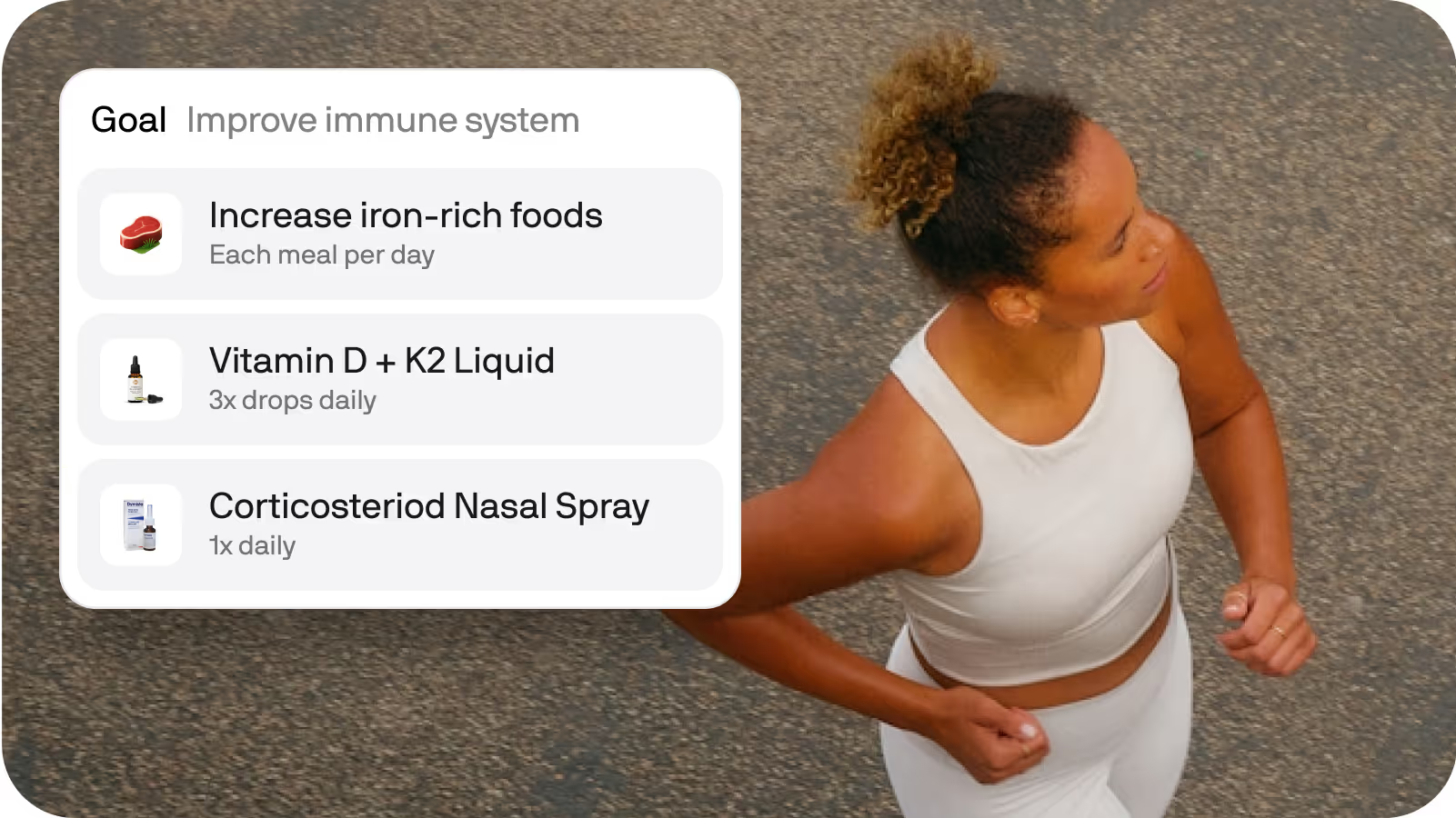
Easy to understand results & a clear action plan with tailored recommendations on diet, lifestyle changes, supplements and pharmaceuticals.

3

A Connected Ecosystem

You can book additional diagnostics, buy curated supplements for 20% off & pharmaceuticals within your Superpower dashboard.

Superpower tests more than 
100+ biomarkers & common symptoms

Developed by world-class medical professionals

Supported by the world’s top longevity clinicians and MDs.

Dr Anant Vinjamoori

Superpower Chief Longevity Officer, Harvard MD & MBA

A smiling woman wearing a white coat and stethoscope poses for a portrait.

Dr Leigh Erin Connealy

Clinician & Founder of The Centre for New Medicine

Man in a black medical scrub top smiling at the camera.

Dr Abe Malkin

Founder & Medical Director of Concierge MD

Dr Robert Lufkin

UCLA Medical Professor, NYT Bestselling Author

Your membership

Select your assessment level

Superpower provides the most advanced health check with a plan that works. Go far beyond your annual physical.

Panels designed by

world class clinicians

2,000+ lab locations

across the country

Baseline

$199/yr

100+ biomarker blood test

Performance

Recommended

$365/yr

115+ biomarker blood test

60 biomarker follow-up retest

Complete

$649/yr

115+ biomarker blood test

60 biomarker follow-up retest

Gut microbiome analysis

Organ age breakdown

Get started
Loading...
HSA/ FSA eligible · Secure checkout

Baseline

$199

per year

Covers your metabolic, hormonal and cardiovascular baseline. The best basis for a single snapshot of your overall health.

What's included

Test Breakdown

These are the panels offered in the tiers above

100+ biomarker blood test

Heart & Vascular Health

20 markers

ApoB, LDL-Cholesterol, Triglycerides

Sex Hormones

8 markers

Testosterone, Estradiol, DHEA-S, Cortisol

Metabolic Health

7 markers

Glucose, HbA1c

Thyroid Health

4 markers

TSH, T3 Uptake, Free T4, T4 Total

Liver Health

13 markers

ALT, AST, GGT, Bilirubin

Nutrients

12 markers

Vitamin D, Total Protein, Hemoglobin

Immune System

16 markers

White blood cells, Neutrophils, Lymphocytes

Energy

5 markers

Ferritin, Iron, Cortisol

Kidney Health

9 markers

Creatinine, eGFR, Potassium, Sodium

See full list →

+21 additional

Included with every assessment

17 health areas developed by world class clinicians

Personalized clinical protocol

On-demand messaging with your care team

20% off superpower marketplace

Member pricing on add-on tests, supplements & RX

Upload past labs & wearable data for tracking

Superpower AI — a world class system trained on you

Complete

$649

per year

Normally $703 (save 8%)

Adds gut microbiome analysis and organ age surfacing, what standard blood panels may miss across energy, digestion, and immunity.

What's included

Test Breakdown

These are the panels offered in the tiers above

115+ biomarker blood test

Heart & Vascular Health

20 markers

ApoB, LDL-Cholesterol, Triglycerides, Lipoprotein(a)

Sex Hormones

11 markers

Testosterone, Estradiol, DHEA-S, Cortisol, PSA, FSH, LH, AMH

Metabolic Health

7 markers

Glucose, HbA1c, Insulin

Thyroid Health

4 markers

TSH, T3 Uptake, Free T4, T4 Total

Liver Health

8 markers

ALT, AST, GGT, Bilirubin

Nutrients

12 markers

Vitamin D, Total Protein, Hemoglobin

Immune System

16 markers

White blood cells, Neutrophils, Lymphocytes

Energy

5 markers

Ferritin, Iron, Cortisol

Kidney Health

24 markers

Creatinine, eGFR, Potassium, Urinary pH, RBC Urine, Nitrites

DNA Health

3 markers

Homocysteine, B12, Folate

Inflammation

3 markers

hs-CRP, Systemic Immune-Inflammation Index

See full list →

+8 additional

60 biomarker follow-up retest

Retesting panel

100 markers

Complete second draw — 60 biomarkers retested for longitudinal tracking.
Most biomarkers can move significantly within 3–6 months if you're actively trying to fix them.

Gut microbiome analysis

$239

Gut microbiome

300+ data points

Profiles 300 bacterial strains in your gut to map your microbial balance.
Identifies dysbiosis that may be driving symptoms like bloating, irregular digestion, skin issues, and mood changes, with actionable guidance on diet and lifestyle shifts to help restore balance.

Organ age breakdown

$99

OrganAge is the most detailed biological age test available today. Rather than showing a single number, it reveals how old each of your body's nine key systems is

Organ age breakdown

10 key systems

Circulatory, digestive, genitourinary, infectious, mental, metabolic, musculoskeletal, nervous, respiratory and systemic ages based on cutting edge longevity research

Included with every assessment

17 health areas developed by world class clinicians

Personalized clinical protocol

On-demand messaging with your care team

20% off superpower marketplace

Member pricing on add-on tests, supplements & RX

Upload past labs & wearable data for tracking

Superpower AI — a world class system trained on you

Get started
Loading...
HSA/ FSA eligible · Secure checkout

Finally, healthcare that looks at the whole you