.svg)

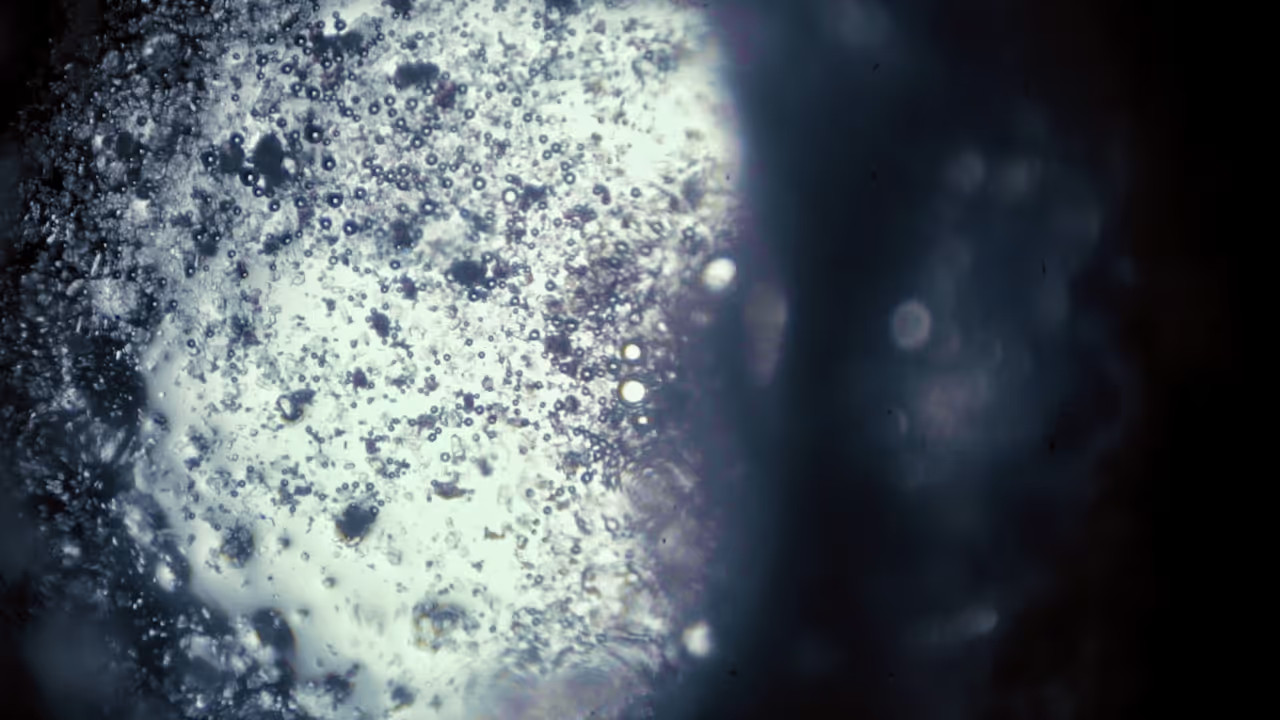



Reading the fungal side of your gut microbiome
A chitin test looks at chitin -- a tough, natural polymer that forms the cell walls of fungi -- as a way to gauge the fungal component of your gut microbiome, often called the mycobiome. Modern versions are stool-based and use DNA sequencing (ITS profiling or metagenomics) to estimate how much fungal material is present and which chitin-degrading enzyme genes (chitinases) your microbial community carries. Some panels also quantify chitin or chitinase activity directly. Results are typically expressed relative to a reference population and reflect your current ecosystem state rather than a fixed trait, shifting with diet, medications, illness, and time.
Why this matters: bacteria dominate the gut, but a smaller fungal community lives alongside them, and chitin is its structural signature. When the balance between bacteria and fungi stays steady, digestion and local immune tone tend to run smoothly; when fungi expand or the community loses diversity, people sometimes notice more gas, bloating, or irregularity. Measuring chitin and chitin-degrading capacity gives a practical readout of how well your microbiome keeps the fungal side in check, and how your gut handles the fungal material that arrives from food and normal microbial turnover.
What the fungal signal adds to a gut picture
Connecting biology to daily life is the value here. A chitin readout can help clarify whether digestive symptoms line up with a shift toward higher fungal load or reduced chitin-processing capacity, especially after events that disturb the microbiome such as a course of antibiotics, a major diet change, or a stretch of high stress. It can also put recent fungal-rich exposures -- mushrooms, fermented foods, or yeast-containing products -- into context, since these contribute chitin and other fungal signals that your microbes process.
Zooming out, the bacterial and fungal sides of the gut influence each other, and both feed into barrier function, immune calibration, and metabolism. Tracking chitin and chitinase capacity over time can show whether fiber diversity, fermented foods, sleep, and stress management are nudging your microbiome toward a more balanced, resilient state. The goal isn't a single perfect number; it's pattern recognition that helps you and your clinician align next steps with your biology.
Reading a chitin and chitinase report
Your report typically summarizes fungal load and the abundance of chitin-degrading genes compared with a reference population, sometimes alongside overall mycobiome diversity. A “balanced” profile usually shows a modest fungal presence with adequate chitin-processing capacity, anchored within a diverse bacterial community.
When the fungal side is in balance, that pattern tends to align with comfortable digestion, steadier stool patterns, and calmer local immune signaling. Optimal ranges vary by person and geography, shaped by diet, transit time, and recent exposures, so the result is best read as a snapshot within a broader ecosystem.
When results show higher fungal load, reduced chitin-degrading capacity, or low overall diversity, that pattern can accompany bloating, gas, or irregularity, and is associated with a microbiome that is more reactive under stress. These findings are not a diagnosis; they highlight a functional pattern worth exploring with your history, diet quality, and other labs.
Companion data that sharpen the picture
Chitin data are most useful alongside other gut readouts -- overall microbial diversity, short-chain fatty acid production potential, organism-level results for yeasts such as Candida, and stool inflammation markers like calprotectin. Interpreted over time and paired with your symptom timeline, a chitin readout helps translate the fungal side of your microbiome into clear, evidence-guided steps for digestive comfort and long-term gut health.


FAQs
The chitin test analyzes the genetic material (DNA and/or RNA) of bacteria, fungi, and other microorganisms in stool to identify species diversity, relative abundance, and the functional potential of the community (the genes and pathways present).
Results describe the microbial balance, composition, and potential functions of the gut microbiome; they indicate patterns of microbial diversity and abundance but do not by themselves diagnose or confirm the presence of a specific disease.
A chitin test is collected as a simple at‑home stool sample using the small swab or vial provided in your kit: you use the swab or a tiny amount of stool placed into the supplied collection vial, seal it per the kit instructions, and prepare it for return to the lab.
Maintain strict cleanliness to avoid contamination (wash hands, use the provided gloves or nozzle if included), clearly label the sample with the required patient information, and follow the kit’s instructions exactly—proper collection, sealing, labeling, and timely shipment are essential for accurate sequencing results.
Chitin test results describe the fungal side of your gut microbiome - your fungal load and your community's chitin-degrading (chitinase) capacity - compared with a reference population. Shifts toward higher fungal load or reduced chitin-processing capacity can accompany digestive symptoms such as gas, bloating, or irregularity, and may reflect how well your microbiome keeps its fungal side in balance.
These microbiome patterns can correlate with certain symptoms but do not by themselves diagnose specific health conditions; results are most useful when interpreted alongside your clinical history, symptoms, and standard medical tests by a qualified healthcare professional.
Next-generation sequencing provides high-resolution microbial data, but interpretation of chitin test results is probabilistic: sequencing detects and quantifies DNA signals from organisms, yet translating those signals into a definitive answer about a condition requires statistical models and clinical context, so results indicate likelihoods rather than certainties.
Results reflect a snapshot in time and may vary with diet, stress, or recent antibiotic use; transient changes in the microbiome, timing and method of sampling, and sample handling can all affect what is detected, so results are best interpreted alongside clinical information and, when appropriate, repeat testing.
Many people test their chitin once per year to establish a baseline, or every 3–6 months if they’re actively changing diet, trying new probiotics, or using other interventions that might affect levels.
More important than any single result is the trend over time—regular, consistently performed tests (same method/lab when possible) let you see whether levels are moving in the desired direction and help link changes to specific interventions rather than relying on one-off readings.
Yes — microbial populations, including those that process or interact with chitin, can shift noticeably within days after dietary or lifestyle changes; short-term fluctuations are common. However, more stable community patterns typically emerge over weeks to months as the microbiome re-establishes a new equilibrium.
For meaningful comparisons, maintain consistent diet and lifestyle for several weeks (or longer) before retesting, so transient changes don’t confound results and true longer-term shifts can be detected.
References
- Jovel, J., Patterson, J., Wang, W., Hotte, N., O'Keefe, S., Mitchel, T., Perry, T., Kao, D., Mason, A. L., Madsen, K. L., & Wong, G. K.-S. (2016). Characterization of the gut microbiome using 16S or shotgun metagenomics. Frontiers in Microbiology, 7, 459. https://doi.org/10.3389/fmicb.2016.00459
- Hill, J. H., & Round, J. L. (2024). Intestinal fungal-host interactions in promoting and maintaining health. Cell Host & Microbe, 32(10), 1668–1680. https://doi.org/10.1016/j.chom.2024.09.010
- Kapitan, M., Niemiec, M. J., Steimle, A., Frick, J. S., & Jacobsen, I. D. (2019). Fungi as part of the microbiota and interactions with intestinal bacteria. Current Topics in Microbiology and Immunology, 422, 265–301. https://doi.org/10.1007/82_2018_117
- Zhou, X., Zhang, X., & Yu, J. (2024). Gut mycobiome in metabolic diseases: Mechanisms and clinical implication. Biomedical Journal, 47(3), 100625. https://doi.org/10.1016/j.bj.2023.100625
- Koh, A., De Vadder, F., Kovatcheva-Datchary, P., & Bäckhed, F. (2016). From dietary fiber to host physiology: Short-chain fatty acids as key bacterial metabolites. Cell, 165(6), 1332–1345. https://doi.org/10.1016/j.cell.2016.05.041


























.avif)
.svg)
.svg)