.svg)

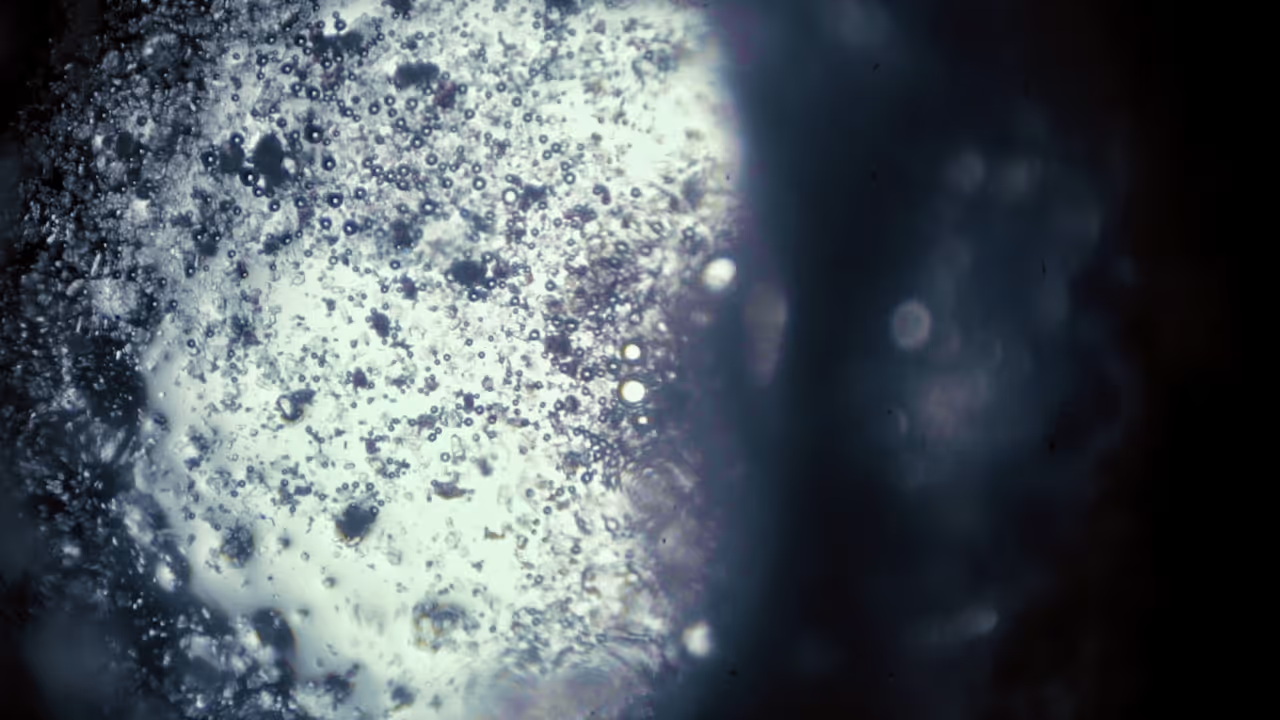



What cellular senescence actually is at a molecular level
Cellular senescence is a stress response mechanism that halts cell division in response to damage. When cells encounter DNA damage, telomere shortening, oxidative stress, or oncogenic mutations, they can enter a state of permanent growth arrest rather than continuing to replicate or undergoing programmed cell death (apoptosis). This response evolved as a tumor suppression mechanism, preventing damaged cells from becoming cancerous.
But senescent cells don't simply stop dividing and fade away. They remain metabolically active and develop what researchers call the senescence-associated secretory phenotype (SASP). Through the SASP, these cells release a cocktail of pro-inflammatory cytokines (including IL-6, IL-8, and TNF-alpha), chemokines, growth factors, and matrix-degrading enzymes. This secretory activity transforms senescent cells from passive bystanders into active drivers of tissue dysfunction.
The zombie cell metaphor captures this paradox perfectly. Like the undead in popular culture, senescent cells refuse to die when they should. They evade the body's normal clearance mechanisms, accumulating in tissues over time. And rather than lying dormant, they actively spread damage to their surroundings through the inflammatory factors they secrete. In young organisms, the immune system efficiently clears senescent cells before they accumulate. But immune surveillance declines with age, allowing these cells to persist and multiply their harmful effects (Nature Aging: strategies for targeting senescent cells in human disease).
Where senescent cells sit within the hallmarks of aging
Cellular senescence is itself one of the primary hallmarks of aging, but it also connects to and amplifies several other aging pathways:
- The SASP factors create a persistent inflammatory state (inflammaging) that accelerates tissue aging even in cells that aren't themselves senescent.
- The inflammatory environment impairs stem cell function and regenerative capacity, reducing the body's ability to repair damaged tissues.
- DNA damage can trigger senescence, but senescent cells also promote genomic instability in neighboring cells through reactive oxygen species and inflammatory mediators.
- Damaged mitochondria can trigger senescence, and senescent cells often exhibit impaired mitochondrial function, increasing oxidative stress.
- Loss of proteostasis (the cell's ability to maintain proper protein folding and degradation) both contributes to and results from cellular senescence.
What drives senescent cell accumulation
DNA damage and telomere attrition
UV radiation, environmental toxins, and reactive oxygen species generated during normal metabolism all cause DNA lesions that can push cells into senescence. The body's DNA repair capacity declines with age, meaning the same level of damage becomes more likely to trigger senescence in older individuals. Telomeres, the protective caps on chromosome ends, shorten with each cell division. When they become critically short, cells interpret this as DNA damage and enter senescence.
Inflammation and metabolic dysfunction
The inflammatory factors secreted by existing senescent cells can induce senescence in nearby cells, a phenomenon called paracrine senescence. This means that even a small number of senescent cells can spread their dysfunction throughout a tissue over time. Insulin resistance and elevated blood glucose increase oxidative stress and advanced glycation end-products, both of which damage DNA and trigger senescence. Obesity expands adipose tissue, which becomes a significant reservoir of senescent cells that secrete inflammatory factors systemically.
Exercise and physical activity
Acute exercise generates transient oxidative stress, but regular physical activity improves mitochondrial function, enhances DNA repair capacity, and increases immune surveillance of senescent cells. The net effect of consistent exercise is reduced senescent cell accumulation and improved clearance.
Why senescent cell burden varies between individuals
Genetic variation significantly influences how quickly senescent cells accumulate and how effectively the body clears them:
- Variants in DNA repair genes affect how cells respond to damage, with some individuals possessing more efficient repair machinery.
- Natural killer cells and macrophages normally identify and eliminate senescent cells, but the effectiveness of this surveillance varies based on immune system genetics.
- Individuals with better insulin sensitivity, lower chronic inflammation, and healthier mitochondrial function generate fewer senescent cells and clear them more efficiently.
- Cumulative UV exposure, air pollution, smoking history, and occupational toxin exposure all influence senescent cell burden throughout life.
- The gut microbiome modulates systemic inflammation and immune function, influencing the production of metabolites that either promote or suppress inflammation.
What the research actually shows about senescent cells and disease
Cardiovascular disease and atherosclerosis
Senescent cells accumulate in atherosclerotic plaques, where they secrete factors that promote plaque instability and rupture. Studies in mice have demonstrated that clearing senescent cells reduces atherosclerosis progression and improves vascular function. Human data shows that markers of cellular senescence correlate with cardiovascular disease severity, though whether senescent cell clearance extends human lifespan remains unproven.
Neurodegeneration and cognitive decline
Senescent cells appear in the brains of patients with Alzheimer's disease and other dementias. The inflammatory environment created by senescent glial cells impairs neuronal function and may accelerate cognitive decline. Animal studies show that removing senescent cells improves cognitive function and reduces pathological protein accumulation, but translating these findings to human therapeutics is still in early stages.
Cancer development and progression
In the short term, senescence acts as a tumor suppressor by preventing damaged cells from dividing. But chronically, the SASP creates an inflammatory microenvironment that can promote cancer development in neighboring cells. Senescent cells secrete growth factors and matrix-remodeling enzymes that facilitate tumor invasion and metastasis. This dual nature means that interventions targeting senescent cells must be carefully timed and context-specific.
Metabolic disease and insulin resistance
Senescent cells in adipose tissue contribute to insulin resistance and metabolic dysfunction. Studies removing senescent cells in obese mice show improved glucose metabolism and reduced inflammation. Human trials testing senolytic drugs (compounds that selectively eliminate senescent cells) in metabolic disease are ongoing, with early results suggesting metabolic improvements, though long-term outcomes remain uncertain. Most mechanistic understanding comes from mouse models, while human evidence is primarily correlational. Early-phase human trials of senolytic interventions show promise but haven't yet demonstrated that clearing senescent cells extends human healthspan or lifespan.
How senescent cells connect to measurable biomarkers
While directly measuring senescent cells requires tissue biopsy, several blood biomarkers reflect their systemic effects:
- High-sensitivity C-reactive protein (hs-CRP) captures the chronic low-grade inflammation driven by the SASP.
- The erythrocyte sedimentation rate (ESR) provides another window into systemic inflammation, though it's less specific than hs-CRP.
- Inflammatory cytokines including IL-6 and TNF-alpha are direct SASP components that reflect senescent cell activity when measured.
- Fasting insulin, HbA1c, and the triglyceride-glucose index reflect insulin resistance and metabolic dysfunction, both of which accelerate senescent cell accumulation.
- Homocysteine reflects methylation capacity and oxidative stress, both relevant to DNA damage and repair.
The value of these markers lies not in single measurements but in tracking them over time. Rising inflammatory markers, worsening metabolic health, and increasing oxidative stress indicators suggest accelerating senescent cell accumulation. Conversely, improvements in these markers may reflect reduced senescent cell burden or enhanced clearance, though this connection remains indirect.
Measuring the biological impact of senescent cells
Understanding how senescent cells affect your aging trajectory requires comprehensive biomarker assessment that captures inflammation, metabolic health, and cellular stress. Superpower's 100+ biomarker panel includes the inflammatory markers, metabolic indicators, and oxidative stress measures that reflect senescent cell activity and its systemic consequences. Tracking these markers longitudinally reveals whether your biological aging is accelerating or whether interventions are successfully reducing the inflammatory burden associated with senescent cells.


FAQs
Senescent cells are cells that have permanently stopped dividing in response to damage such as DNA breaks, telomere shortening, or oxidative stress. Unlike cells that undergo apoptosis and die cleanly, senescent cells remain metabolically active and resist clearance. They are called zombie cells because, like the undead, they refuse to die when they should and actively spread harm — secreting inflammatory SASP factors that damage neighboring tissue and recruit immune cells in a way that compounds over time.
Senescent cells secrete the SASP, a cocktail of pro-inflammatory cytokines including IL-6, IL-8, and TNF-alpha, chemokines, matrix-degrading enzymes, and growth factors. These factors degrade the extracellular matrix, impair stem cell niches, reduce regenerative capacity, and induce senescence in neighboring healthy cells through paracrine signaling. A small number of senescent cells can spread dysfunction across entire tissue compartments through this bystander effect, amplifying damage far beyond the original senescent cells themselves.
Senescent cell accumulation is linked to atherosclerosis, where senescent vascular cells promote unstable plaques; neurodegeneration, where senescent glial cells impair neuronal function; and metabolic disease, where senescent adipose cells drive systemic insulin resistance. Animal studies removing senescent cells show improvements in vascular function, cognitive performance, and glucose metabolism. Human evidence is primarily correlational, but markers of senescence correlate with cardiovascular disease severity and frailty independently of chronological age.
Cellular senescence is triggered by DNA damage from UV radiation, environmental toxins, and reactive oxygen species; by telomere shortening that occurs with each cell division; by oncogene activation as a tumor suppression mechanism; and by inflammation itself through paracrine senescence, where existing SASP factors induce senescence in neighboring cells. Insulin resistance, elevated blood glucose, and obesity increase oxidative stress and advanced glycation end-products, all of which accelerate senescence induction across multiple tissue types.
Two processes compound with age. First, DNA repair capacity declines and cumulative damage accumulates, increasing the rate at which new senescent cells are generated. Second, immune surveillance by natural killer cells and macrophages becomes less efficient, reducing the clearance rate. Senescent cells also actively evade clearance by upregulating anti-apoptotic BCL-2 proteins and expressing immune checkpoint molecules. The combination of higher generation and lower clearance creates an exponentially rising senescent cell burden that accelerates tissue dysfunction.
Genetic variation in DNA repair genes, natural killer cell activity, and immune system genetics significantly influences both how quickly senescent cells accumulate and how efficiently they are cleared. Individuals with better insulin sensitivity and lower chronic inflammation generate fewer senescent cells and clear them more effectively. Cumulative UV exposure, smoking, air pollution, occupational toxin exposure, and gut microbiome composition all modulate lifetime senescent cell burden independently of chronological age.
References
- Song, S., Lam, E. W., Tchkonia, T., Kirkland, J. L., & Sun, Y. (2020). Senescent Cells: Emerging Targets for Human Aging and Age-Related Diseases. Trends in biochemical sciences, 45(7), 578-592. https://doi.org/10.1016/j.tibs.2020.03.008
- National Institute on Aging. (n.d.). Does cellular senescence hold secrets for healthier aging?. https://nia.nih.gov/news/does-cellular-senescence-hold-secrets-healthier-aging
- Childs, B. G., Durik, M., Baker, D. J., & van Deursen, J. M. (2015). Cellular senescence in aging and age-related disease: from mechanisms to therapy. Nature medicine, 21(12), 1424-35. https://doi.org/10.1038/nm.4000
- National Institute on Aging. (n.d.). Senolytic drugs reverse damage caused by senescent cells in mice. https://nia.nih.gov/news/senolytic-drugs-reverse-damage-caused-senescent-cells-mice
- Gasek, N. S., Kuchel, G. A., Kirkland, J. L., & Xu, M. (2021). Strategies for Targeting Senescent Cells in Human Disease. Nature aging, 1(10), 870-879. https://doi.org/10.1038/s43587-021-00121-8


























.avif)
.svg)
.svg)